PCL-5: why a symptom checklist differs from a trauma quiz
Updated October 12, 2026 · Reading time: 5 min · 5 sections

Before comparing two quiz results, check what each one asks. The PCL-5 records PTSD symptoms; a childhood reflection asks about a different part of your experience. Having twenty questions does not make them the same measure. I look at the questions and instructions before the total. This is general information, not individual medical advice.
PCL-5 is the name of a specific measure
The VA National Center for PTSD describes the PCL-5 as a twenty-item self-report measure addressing PTSD symptoms. It is used in settings such as symptom monitoring and assessment, with interpretation by a clinician. Its twenty items and response rules belong together. Replacing those items with general questions about trust or childhood while retaining the name would misrepresent the measure.
Each PCL-5 item is rated from 0 to 4 for how much a symptom bothered the person. Twenty maximum ratings give 20 × 4 = 80; twenty zero ratings give 0. The VA offers past-month and past-week forms, so the instructions on the chosen form matter. The VA describes a total range of 0–80 and emphasizes that provisional screening and diagnosis are not equivalent. It identifies a structured clinical interview as the diagnostic gold standard. A number produced by a checklist has to be understood in context. An online label such as “positive” does not tell you that an individual has received a full assessment.
I would avoid borrowing a single cutoff and presenting it as a universal dividing line between “traumatized” and “not traumatized.” The intended population, purpose and interpretation matter. The browser reflection on this site has no PCL-5 cutoff, symptom severity bands or automatic PTSD conclusion. It keeps your selected answers in an answer summary instead of pretending that a different item set can reproduce that instrument. The main ACE mode also measures something different: categories of childhood exposure, not PCL-5 symptom severity.
The details are part of the measure
| Detail | Why I check it |
|---|---|
| Exact items | Changing a question can change what a response describes |
| Response options | Agreement and symptom intensity are different questions |
| Instructions and timeframe | A response needs the context in which it was requested |
| Language version | A convenient translation is not automatically a validated adaptation |
| Interpretation | A checklist total and a clinical assessment are different outputs |
A statement such as “I find it difficult to trust people” can invite useful reflection. It does not necessarily specify a PTSD symptom, a timeframe or the relationship to an assessed event. Asking how strongly you agree with it is also different from asking how much a particular symptom bothered you. Those distinctions are easy to lose when every form is called a trauma test.
Translations need the same care. The reflection here is available in six languages to make its own prompts accessible. That does not establish clinical validity for any language. If you are completing a measure with a professional, ask which version they intend and whether you should clarify unfamiliar wording rather than silently choosing the closest available answer.
When someone gives you a symptom checklist
- Ask for the name of the instrument and what the person using it wants to learn.
- Read the instructions, including the timeframe, before answering individual items.
- Ask what to do if an item is unclear, uncertain or too difficult to answer.
- Keep the distinction between the recorded response and any interpretation of it.
- Ask how you will discuss the result, where it will be stored and who can access it.
You can ask these questions without challenging the value of the assessment. They make the purpose of the form clearer. For instance, “Are we looking at changes since my previous visit, or using this as one part of an assessment?” is a different question from “Does this score prove I have PTSD?” A professional can explain how a measure fits within their process.
Do not adjust your responses to reach a label you found online. If you are uncertain about an item, write down the uncertainty or ask for clarification in the setting where the measure is being used. A questionnaire should record what you can report according to its instructions. Guessing to satisfy a threshold makes the number less useful rather than more authoritative.
A concrete comparison without a pretend conversion
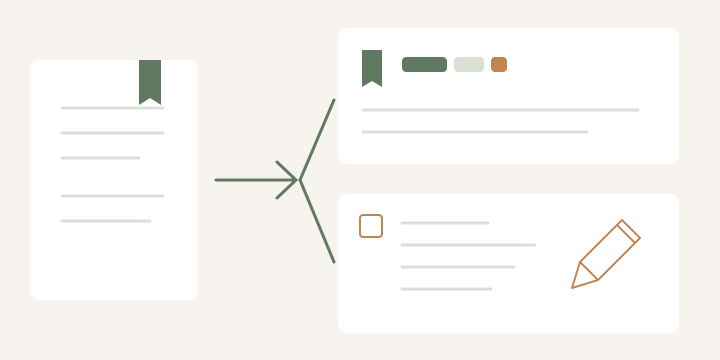
Imagine answering a custom statement about boundaries with “Agree.” The reflection stores that selected option. If you also bookmark the question, it adds one user-selected conversation topic to the relationships area. It does not assign a PCL-5 symptom rating. No conversion formula can turn that agreement response into a valid checklist item simply because both tools have twenty prompts.
Now imagine that another site gives a PCL-5 total after you complete its intended items. Comparing that total with this reflection’s answered count would be meaningless: one number summarizes specified responses, while the other counts how many prompts you answered, with skipped and unsure prompts listed separately. A value of twenty on the reflection can mean twenty completed prompts with any mixture of choices. It says nothing about a clinical threshold.
Make present concerns discussable
The useful next question can be smaller than a diagnostic label. You might want to discuss an unwanted memory, a difficulty sleeping or a change in how you relate to people. Describing what you notice, when it tends to happen and what it disrupts gives a conversation something concrete. The cause remains an open question; the reflection cannot determine it from an answer pattern.
My support-conversation guide offers a simple way to keep that agenda manageable. You can choose one topic, decide what details you do not want to share yet and ask how a professional would assess the concern. If you are comparing symptom tools with an adversity count, read the ACE explanation as well. Childhood exposure and current symptom assessment are not identical tasks.
There is no need to complete the optional reflection to ask for support. You can skip all its prompts and still read these guides. For immediate danger, contact local emergency services. For human emotional support, the external helpline directory lets you select your country. A web checklist cannot replace emergency response or a qualified individual assessment.
Common questions
Does this site administer the PCL-5?
No. The main test counts ten ACE exposure categories; the optional reflection has twenty custom prompts. Neither mode administers the PCL-5 or produces a PCL-5 total.
What is the PCL-5 score range?
Its twenty items are each rated from 0 to 4, giving a possible total from 0 to 80. A clinician should interpret the intended checklist in context.
Does a PCL-5 result confirm PTSD?
A checklist may support screening or a provisional diagnosis. The VA identifies a structured clinical interview as the diagnostic gold standard.